GALLERIES

Impressions of Movement

San Francisco Impressions

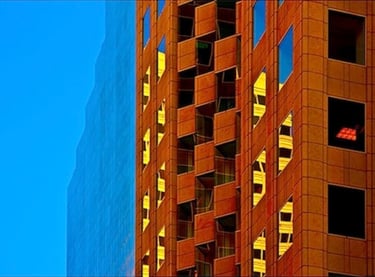
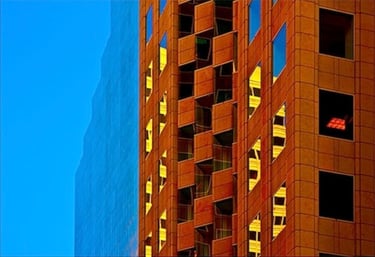
San Francisco : Top to Bottom

Ocean Beach San Francisco

Point Reyes California

The Bridge : Golden Gate

Tramole On Lines . France

Tramole Decoupage

Entre Chien et Loup

In Memory of Where They Died . Italy

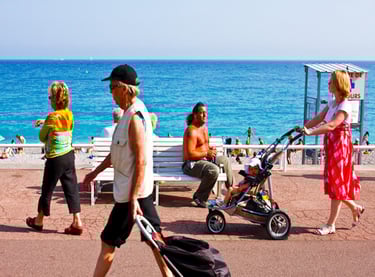
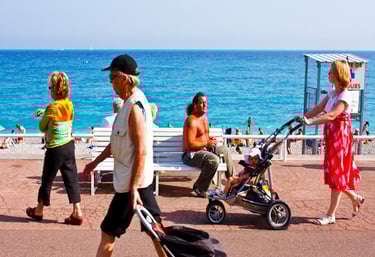
Promenade des Anglais . Fance

Death Valley

Animaux Decoupage

Le Beo de Blins . Italy 2009

Turin Italy


HOME . statement . bio . email


ARCHIVE 1970s

Shah of Iran in DC

Kent State May 4th Coalition

Pittsburgh Pennslyvania

Perspectives

UN Visitis Pittsburgh

Pierre Alechinsky


WRITINGS

Humanity in Chaos


© 2012 karl f. stewart


stones in barge . italy

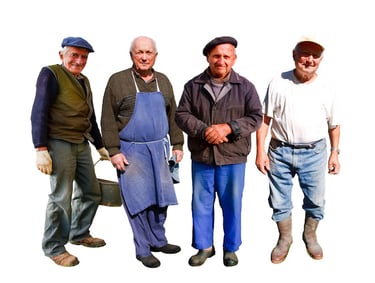
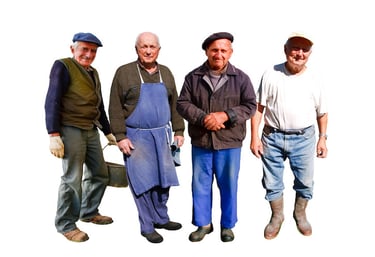
Once upon a time those who quarried and cut stone in Barge, Italy were called Paolo, Roberto, Giuseppe or Pietro. Now we have Xianquan, Guohaj, Shiqu, Mustapha and Faji.

Quarrying and cutting stone is a particularly hard profession. Even though many aspects of the job are mechanized, much of the work is still done manually. It’s not a job many want to do. The last generation of Italian stone cutters retired about nine years ago. The newer generations haven’t taken up the hammer and chisel in sufficient numbers to replace them.

And where locals refuse to work, foreigners take their place. Barge (pronounced Bar . jay), located in the Piedmont region, and the towns immediately around it, in particular have a high number of Chinese immigrants working in stone.

It would be easy to concentrate on the Chinese workers who make up the majority of today’s stone cutters around Barge. It’s what could be called a good story line. But it would be unfair not to recognize Vincenzo, who lost his job a few years back and has now been cutting stone for the last two years. “When you’re in your late 50s, where are you going to find a job? Here they accepted me.” I work in the open air. I organize my time on my own. I’m happy working here.”

Then there are Guido, who has been working the same quarry (Mount Bracco) for 16 years, and the three Italian Ferrero brothers. Or the other foreigners who regularly work the stone: Aurelian from Romania, M’Hamed, Morocco, Noureddine, Tunisia and Peter, Nigeria.

All those who quarry and cut stone breathe the silica dust and bend their backs to provide a global market with some of the world’s best stone. Leonardo Di Vinci observed that the stone from Mount Bracco, located in the township of Barge (and which is part of this documentary), was of extremely high quality. The photos were taken in May, June and July 2009. Special thanks to Cave Gontero for allowing me access to their premises.

Stones in Barge was awarded an Honorable Mention in the Deeper Perspective category of the International Photography Awards 2009.

Content on this page requires a newer version of Adobe Flash Player.

Get Adobe Flash player